
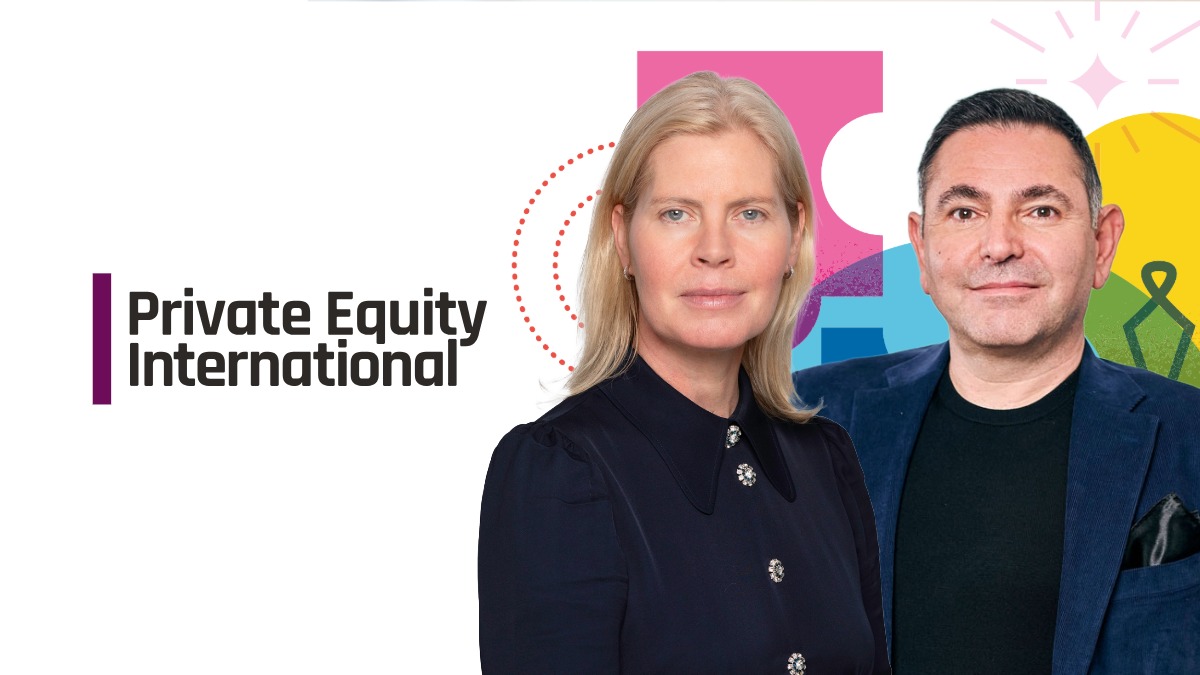
Helen Williams and Bahadir Basdere, CEO of Trench Group, featured in Private Equity International's Operational Excellence report, sharing their perspectives on value creation, complex carve-outs and the importance of building trusted partnerships.
In the article, Helen and Bahadir explore how operational expertise, sector knowledge and clear communication help businesses navigate complex carve-outs and unlock long-term growth.
They highlight the value of trusted partnerships between investors, value creation teams and management, combining their respective expertise to align around a shared vision and drive successful transformation.
Under Triton Partners' ownership, Trench Group continues to solidify its role as a key player in the transformer and high-voltage market, meeting surging demand for the components essential to modern power grids and the energy transition. Helen Williams heads Triton Partners' Accelerator Unit, a team of dedicated value creation professionals who support portfolio company management teams to build capabilities, enhance performance and drive operational and strategic improvements.
Access Private Equity International's full Operational Excellence report here: https://www.privateequityinternational.com/operational-excellence/
Optimising complex carve-outs
Clear communication with management teams and a relationship built on trust are vital in these hands-on transactions, argue Helen Williams of Triton Partners and Trench Group's Bahadir Basdere
How has the thinking around value creation strategy evolved in recent years?
Helen Williams: As an industry, private equity has been moving away from being primarily about financial engineering, towards a focus on operational improvement. This has been driven in part by pressure on multiples and higher interest rates.
Having been a mid-market investor for around 30 years and supported by our Accelerator Unit for roughly 20, we recognised this early on. The thinking evolves with each new portfolio company experience, but one consistent aspect of value creation for us over the decades has been the importance of a repeatable playbook approach, where the majority of returns are generated from margin expansion and revenue growth, even in periods of very low interest rates.
To deliver on that idea, us getting involved pre-investment helps the deal team understand and underwrite risk and opportunity. Then, post-investment, we back the management teams and work in close co-ordination with them to deliver against the investment thesis.
Even so, you have to keep honing the way you work with management teams. Private equity firms need to find the right way for them, depending on the types of businesses they invest in and how they want to drive returns. In our case, more than half our deals are carve-outs, but we also buy from founders and carry out take-privates.
The aim is to apply the same value-creation discipline regardless of the background. That discipline is the key to success.
Bahadir Basdere: From my experience with Triton, as CEO of a business the firm carved out back in 2024, it's clear to me that the value creation to date has been all about prioritising industry knowledge, putting the right team in place – including operating partners with deep sector experience – and also building trust with management from the outset.
When Trench Group was first carved out of Siemens Energy, the advisory committee right from the start included people who had been in my shoes 10 or 20 years previously, which has made my life much easier ever since. That's a big lever for accelerating value growth; in the two and a half years since then, the top line has more than doubled.
Trench is in the power grid industry, and our key markets are growing fast. For us, it has been important to make quick decisions and be bold. That has required private equity support from partners with a deep understanding of our particular industry.
What other operational challenges arise in carve-out transactions, and how can deal teams and operating partners most effectively address those?
HW: Carve-outs are about understanding the underlying quality of the business, what's there and what's not. Then it's about understanding the market backdrop, including any sector and subsector tailwinds and issues.
A huge amount gets written about how carve-outs often underdeliver, but they can also be incredibly successful. Execution is the real challenge here, and you need a management team that can lead on that. Also essential is figuring out where the risks are, and what type of business you want to build and scale. Then you can make sure the platform you create on day one is setting you up to achieve that.
In our case, the Accelerator Unit acts as the bridge: the investment team has a thesis that we are helping to translate and deliver alongside management. Operating partners with industry experience are the critical link, as we all bring our different superpowers to bear.
BB: A carved-out business does not come into this world fully functioning, because so many of its operations take place centrally within the parent to begin with. So, in our case, we were suddenly facing a situation where I needed to establish a finance department, legal, HR and so on.
Putting together a plan for setting up the right organisation and for shaping those functions is one important way the operating partner teams can help. We were able to do that quickly and have stand-alone capabilities the day we did the carve-out, leaving only a handful of service agreements in place with the former owner. From the moment we signed, we went full speed. And by the day we completed the carve-out we were fully independent, which is not typical when you are separating from a corporation the size of Siemens Energy.
When investing in industrial tech businesses like Trench, what are the obvious value creation levers that operating partners might identify in the 100-day plan?
HW: Trench was a classic corporate orphan. This was a business that was not part of Siemens' core focus, so the question was where would you invest and what would you do if it was. Building on specific sector knowledge from previous deals, the investment team understood the complexities and could build conviction around those focal points. Many others saw only the complexity and hesitated; we saw the same complexity, understood it and had the conviction to back it.
The strategy here was effectively around building capacity and a footprint in the right areas to meet the demand we saw coming, which included geographical expansion. Fundamentally, we were investing in a stand-alone business in a market that we saw turning in our favour. Then we brought operating partners with deep experience to the table, along with IT and technology capabilities, our procurement team, and the CFO expertise needed for reporting as a stand-alone business.
What changes the most when management teams transition from a corporate conglomerate to a PE-backed environment amid a carve-out?
BB: The things that really change are speed, intensity and accountability, all of which I've really appreciated. Accountability under private equity differs from what it's like leading a business inside a large conglomerate.
Our core focus now is increasing value and improving performance. That doesn't just mean better returns; it means building something stronger and more sustainable. For instance, we have created more than 800 new jobs in the past two and a half years. Moving forward, we plan to grow the team from 3,000 today to around 4,000.
What's the best way to embed a healthy working relationship with operating partners across the portfolio company?
HW: Trench is a great example of the importance of building trust during the acquisition process, bringing in a team that has deep sector expertise to give management comfort.
Of course, at the end of the day the aim is to return money to investors. The best way to do that is by growing businesses, and that sometimes involves making tough decisions. But fundamentally, private equity firms should always prioritise acting as a good partner, building trusted relationships.
BB: In our case, we meet with key board members weekly and often have challenging conversations, sometimes addressing tough decisions. Everyone has skin in the game, and we are all working in the best interests of the company.
What are the biggest challenges involved in complex carve-outs, and what kind of wins can private equity firms theoretically expect?
BB: The biggest challenge in our case has been taking decisions quickly enough. The clearest example is our new US factory; we took that decision in three board meetings over two months – where in a conglomerate it would have taken at least a year.
We then built the plant in just 15 months. This speed of execution is also crucial. What we do matters far beyond business, given power grids' importance for society. We need to live up to that responsibility. So, fast decision-making and a willingness to invest the money we earn back into the business have been big wins over the past couple of years.
HW: In a really complex carve-out, the biggest challenge is often around getting important long-term changes right, while also continuing to serve a blue-chip customer base. In those scenarios, fast decision-making is essential and will ultimately reward an investor's conviction in that particular market.
What would you identify as the key elements of a successful carve-out?
HW: It's about getting both the day-one dynamics right and knowing what you want the business to look like in three or four years' time.
You also need to have the right leadership in place, and a clear understanding of how you are going to work with them. That means having the right chair on board, having a clear plan and then delivering hands-on support with trust and transparency between owner and management team.
BB: The trust element and having that clear picture of the end goal are both so important.
You also need to consider the company's future direction. With a clear roadmap in place, we can make the right decisions the right way, working collaboratively to build a better business for the long-term.
Helen Williams is a partner and head of the Accelerator Unit at Triton Partners; Bahadir Basdere is president and chief executive of portfolio company Trench Group
About Triton Partners
Founded in 1997 and owned by its partners, Triton Partners is a leading European mid-market sector-specialist investor. Triton Partners focuses on investing in businesses that provide mission-critical goods and services in its three core sectors of Business Services, Industrial Tech, and Healthcare.
Triton Partners has over 150 investment professionals and value creation experts across eleven offices and invests through three complementary “All Weather” strategies: Mid-Market Private Equity, Smaller Mid-Cap Private Equity, and Opportunistic Credit.
Media contacts
Triton Partners: media@triton-partners.com